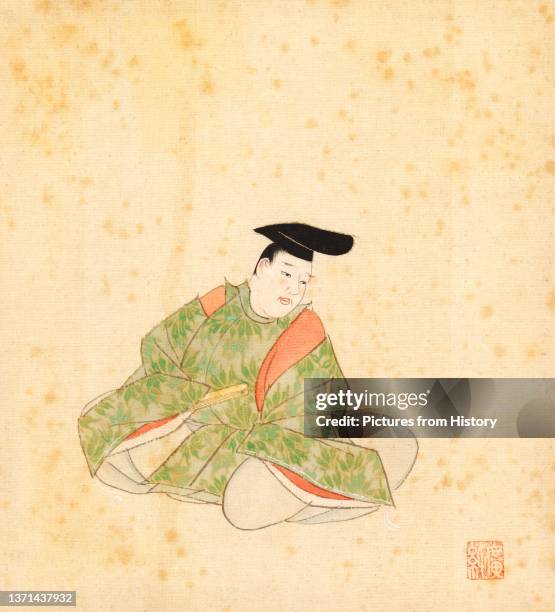
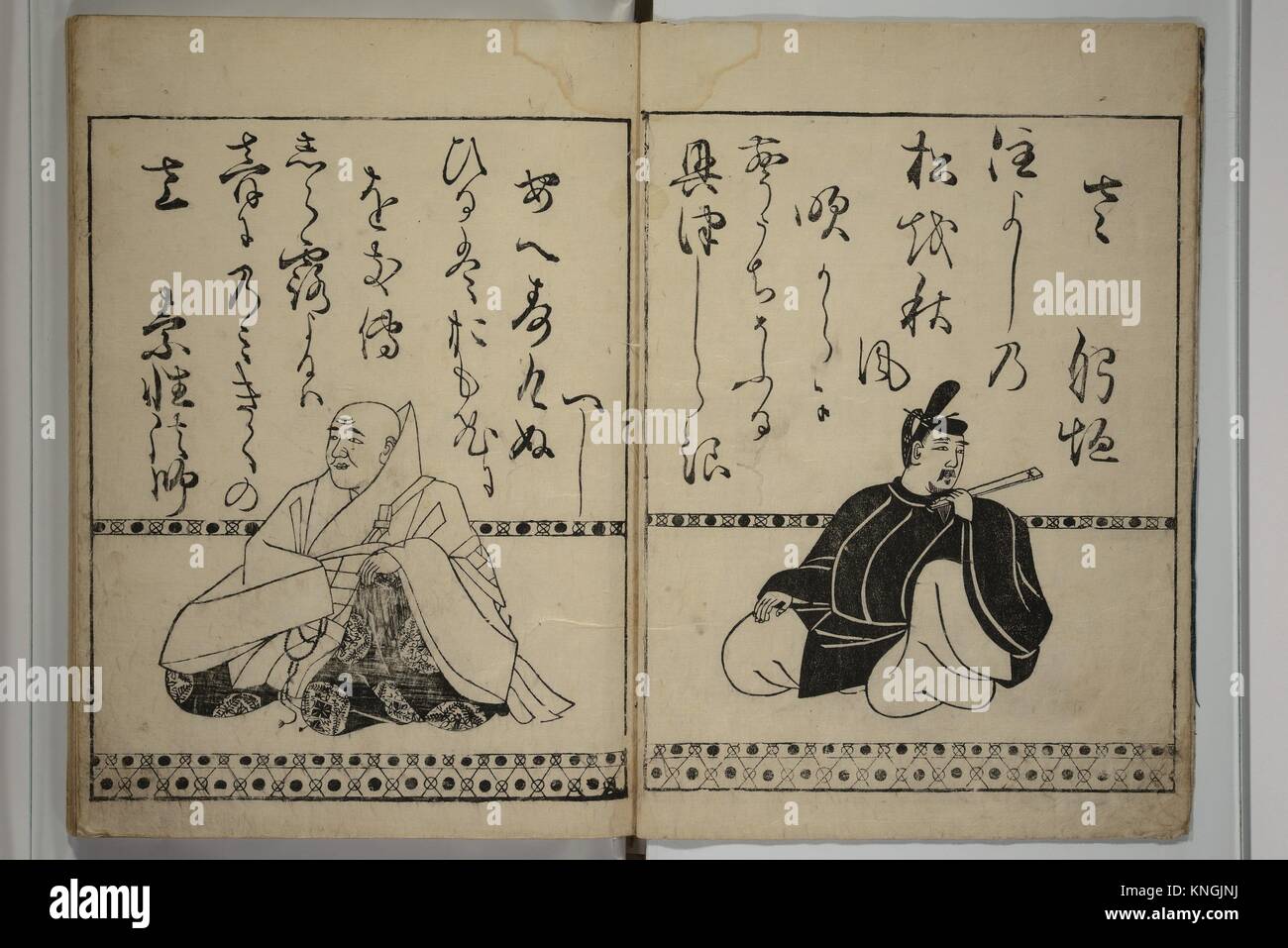
The Thirty-Six Immortals of Poetry (三十六歌仙, Sanjūrokkasen) are a group of Japanese poets of the Asuka, Nara, and Heian periods selected by Fujiwara no Kintō as exemplars of Japanese poetic ability. The oldest surviving collection of the 36 poets' works is Nishi Honganji Sanju-rokunin Kashu ("Nishi Honganji 36 poets collection") of 1113. Similar groups of Japanese poets include the Kamakura period Nyōbō Sanjūrokkasen (女房三十六歌仙), composed by court ladies exclusively, and the Chūko Sanjūrokkasen (中古三十六歌仙), or Thirty-Six Heian-era Immortals of Poetry, selected by Fujiwara no Norikane (1107–1165). This list superseded an older group called the Six Immortals of Poetry.
Sets of portraits (essentially imaginary) of the group were popular in Japanese painting and later woodblock prints, and often hung in temples.
Kintō's Thirty-Six Immortals of Poetry
Thirty-Six Female Immortals of Poetry
Main article↗︎
Nyōbō Sanjūrokkasen (女房三十六歌仙), composed in the Kamakura period, refers to thirty-six female immortals of poetry:
New Thirty-Six Immortals of Poetry
There are at least two groups of Japanese poets called New Thirty-Six Immortals of Poetry (新三十六歌仙, Shinsanjūrokkasen):
- One selected by Fujiwara no Mototoshi (Heian period, now lost)
- One including poets mainly of the Kamakura period; who selected this is unknown.
The term usually refers to the second, as this is still extant:
Late Classical Thirty-Six Immortals of Poetry
See also
- Rokkasen
- Nishi Honganji Sanju-rokunin Kashu
References
External links
- Poem Scroll of Thirty-Six Immortal Poets
- Arts of Japan exhibit